Floor Systems
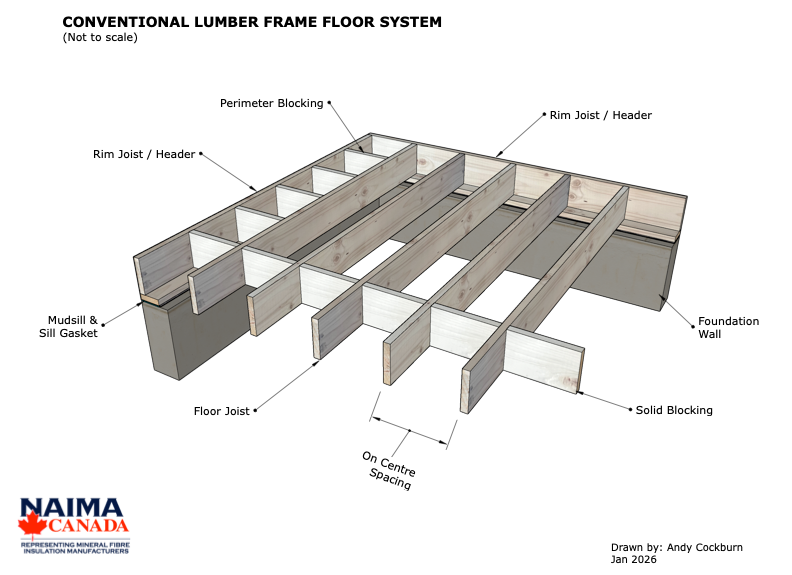
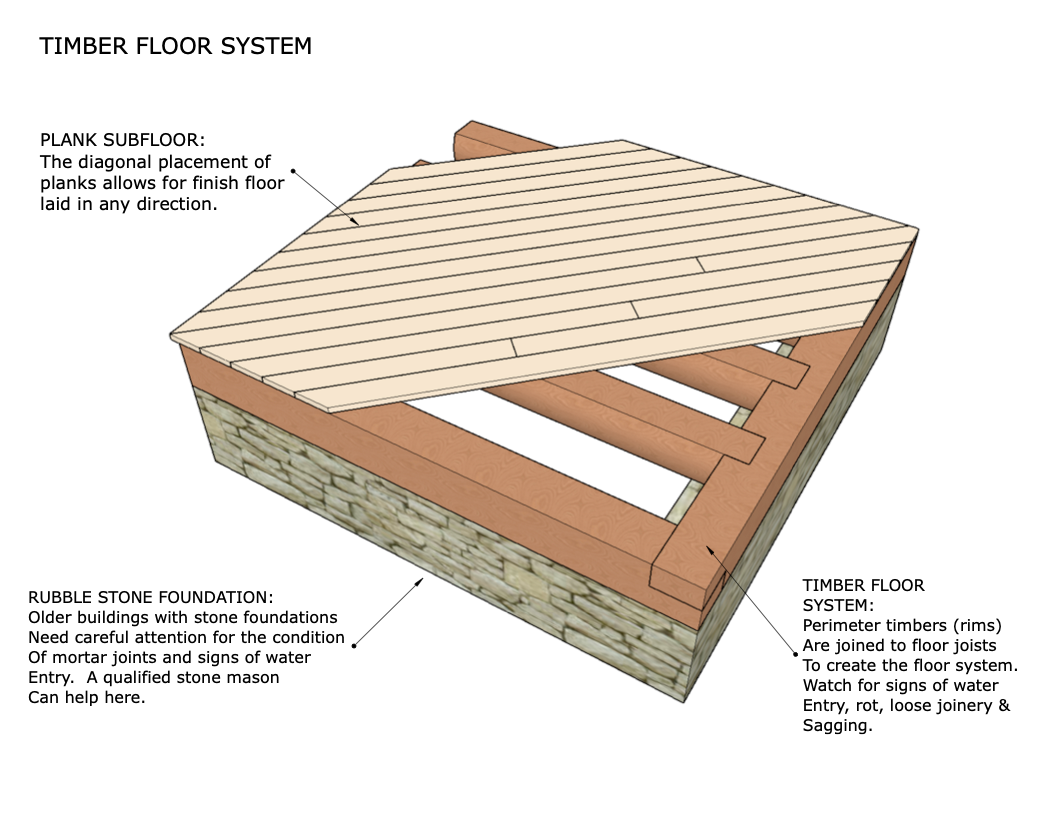
Floor structures in buildings carry live and dead loads to supporting walls and down to the foundation. They are made up of many parts - floor joists, beams, blocking, rims and subfloor.
Important Safety Considerations for Floor Systems:
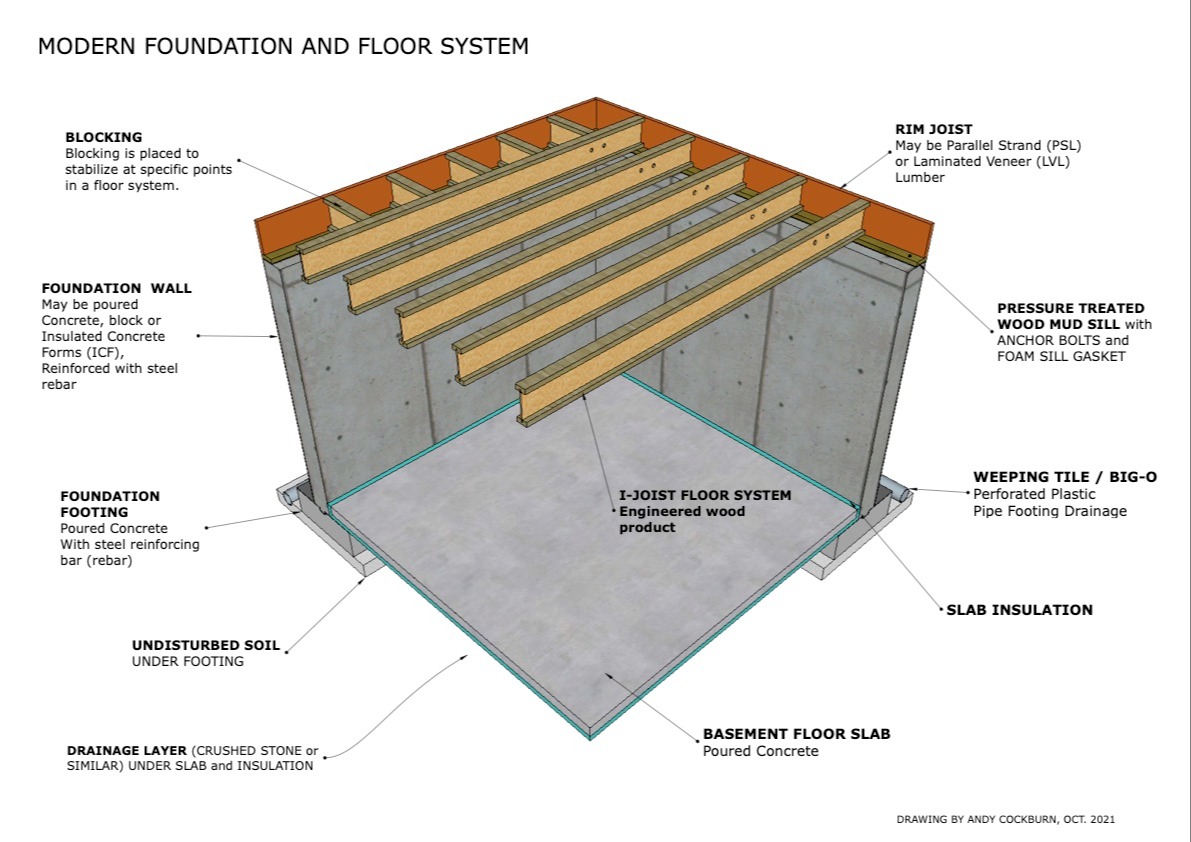
- Floor systems are made of common components: Joists, rims, blocking, sills, gaskets, anchor bolts and sheathing.
- The size, spacing, fastening and type of floor system parts are determined by the building code OR by proprietary, engineered component manufacturers (i.e. laminated veneer lumber (LVL))
- Floor systems are part of the LOAD BEARING capacity in a building - they carry live and dead loads from above, down through beams, posts, foundation walls and footings and out to the ground.
- Floor joists and support beams may sag over many years of settling and load changes. Creaky floors may be a sign that floors are starting to deform.
- The outer perimeter at ground level, or 'rim joist', may show signs of deterioration if water infiltration has happened. Watch for stains and obvious signs of decay.
- Older stairs may show the effects of sagging floors - cracks open up in the joints at stringers, risers and treads
- Floors in kitchens and bathrooms would see the most deterioration, for the presence of water.
- Rotting of floor structure is a serious problem that happens when water collects around the foundation.