Roof Systems
The roof structure of an older building may or may not have insulation and/or barriers for air tightness. Before installing these layers in a retrofit, there are important steps to make in preparation.
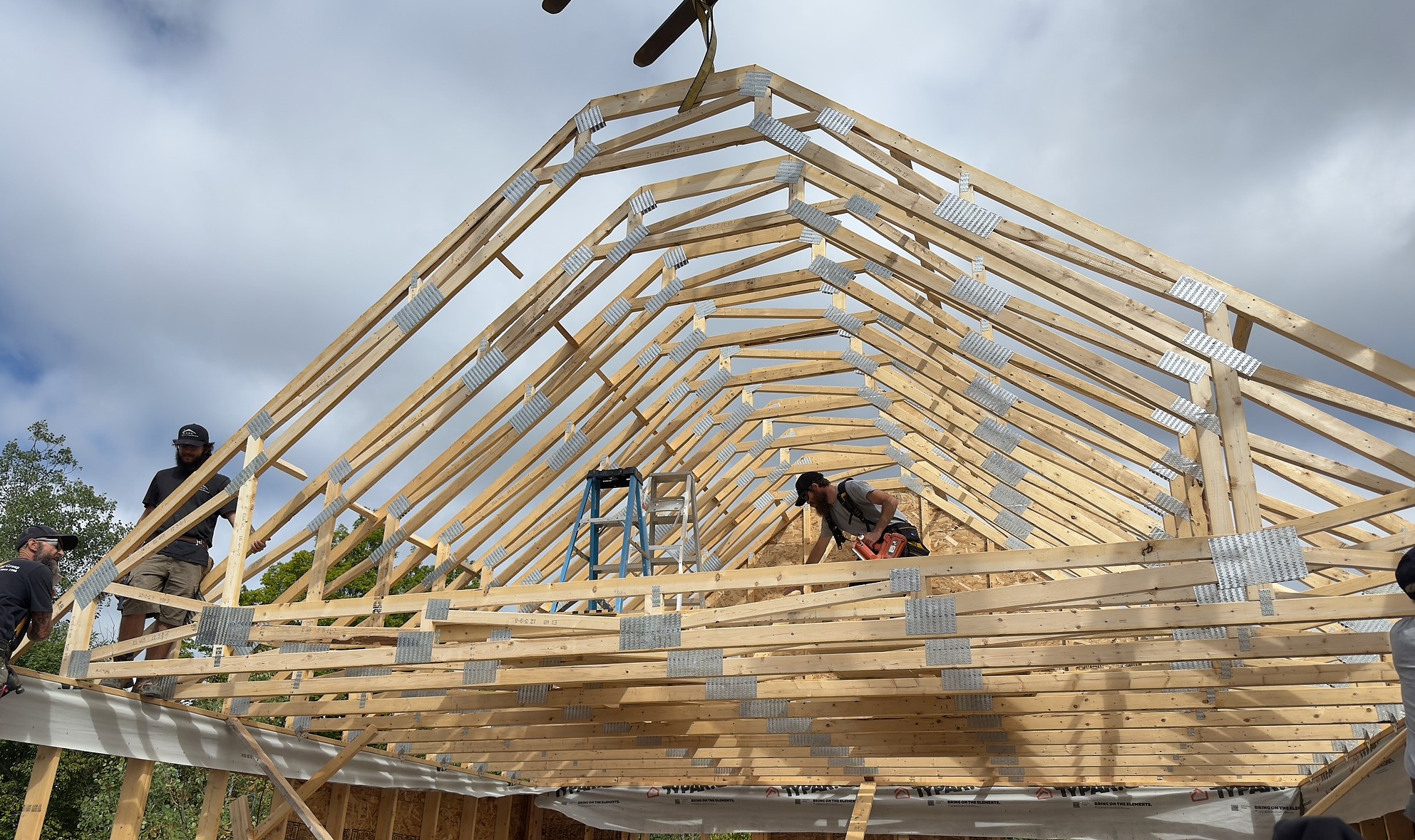
SAFETY WARNING: Working on roofs and ceilings carries the risk of injury from falls. ALL workers should have proper training in fall arrest systems and safe working at heights procedures.
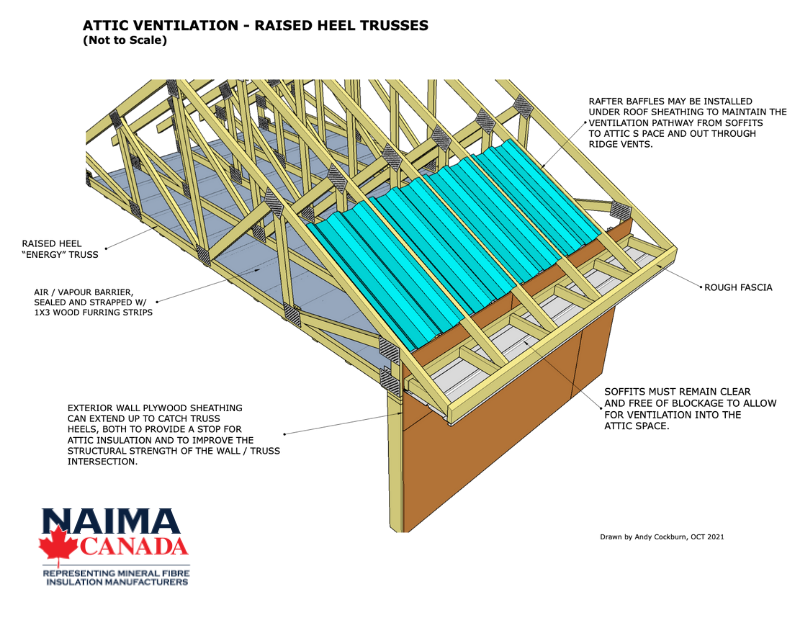
- Roof systems are made from common components: rafters, trusses, ridge boards and beams, blocking, braces and sheathing.
- The size, spacing, fastening and type of roof system parts are determined by the building code OR by proprietary, engineered component manufacturers (i.e. raised heel trusses))
- Roof systems are part of the LOAD BEARING capacity in a building - they carry snow, ice and wind loads from above, down through roof frame parts, down to walls, floors, foundations and out to the ground.
- SPECIAL NOTE: The size and spacing of roof parts is determined by CLIMATIC DATA from the government of Canada. Because of the changing climate, snow loads and the effects of wind on roof structures may change where you are.
- Further reading:
- Managing Changing Snow Load Risks for Buildings in Canada's North (CSA)
- Codes, standards and guidance for climate resilience (Housing, Infrastructure and Communities Canada).
- Further reading:
Important Safety Considerations for Roof Assemblies:
Attic insulation is one of the most common energy efficiency retrofits in older buildings. The area must be properly prepared for the new material addition:
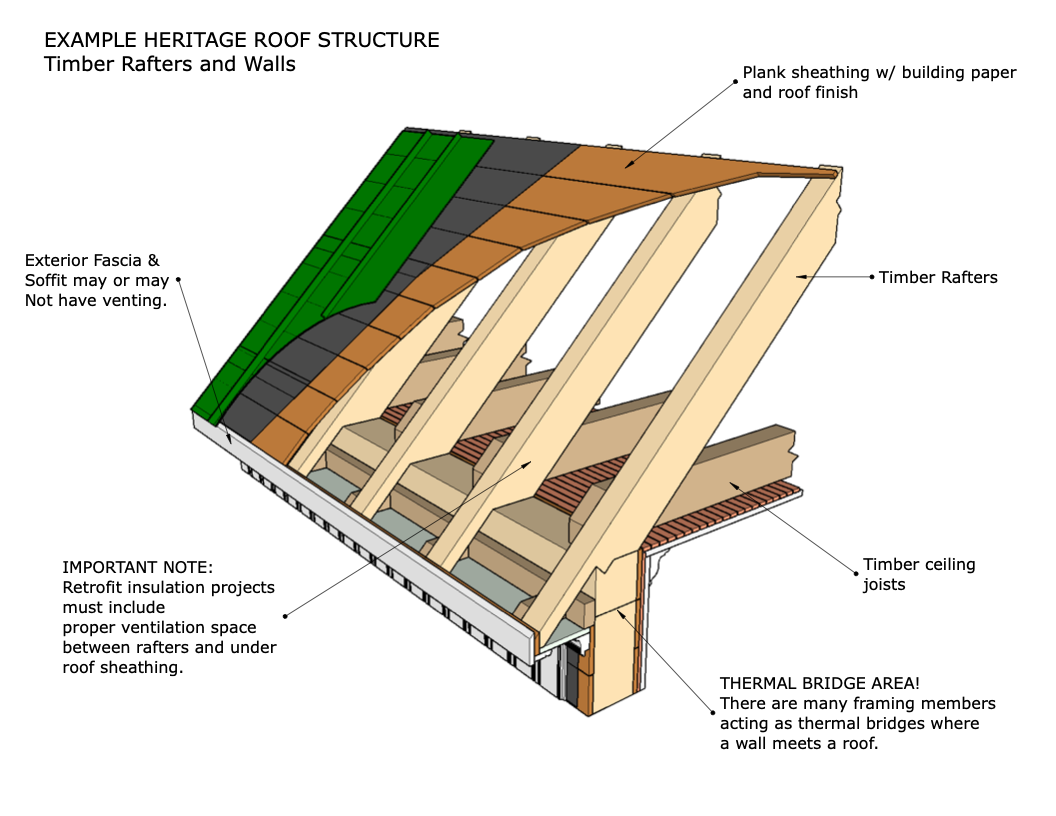
- Ventilation: Improper ventilation of attic spaces can contribute to moisture building up, especially in cavities that are packed with new insulation. Care must be taken to properly arrange ventilation at roof soffits and ridges.
- Where rafters / trusses meet walls at the lowest part of the slope, adequate airspace must be allowed between new insulation and the underside of the roof deck. This space can be maintained with foam plastic or cardboard rafter baffles.
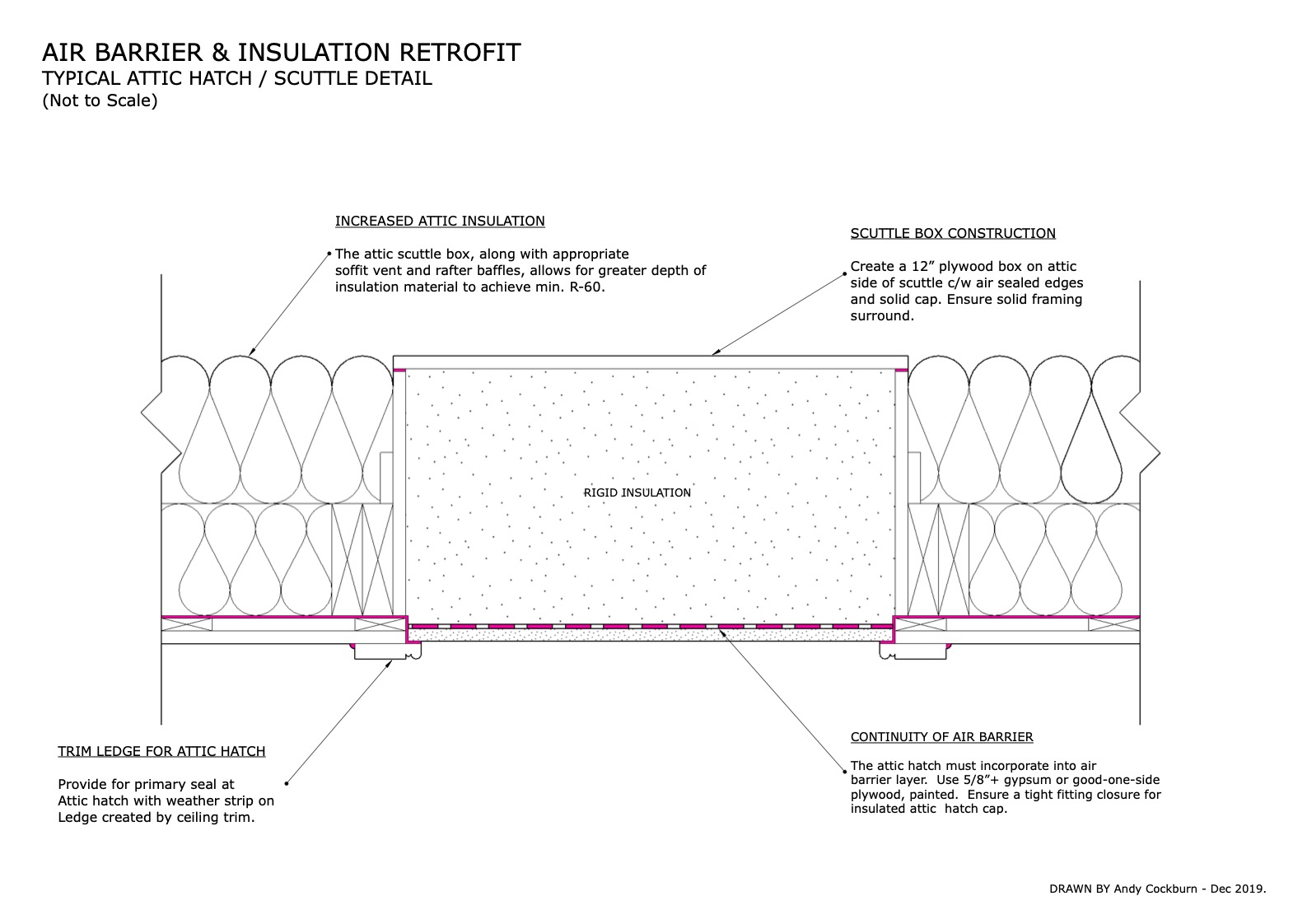
- Attic Hatches: Insulating and air sealing the attic hatch must be done to mitigate leaks and heat loss.
CONFINED SPACE SAFETY
While most attics will have sufficient ventilation to allow for fresh air circulation, there may be structures that would pose a hazard as a confined space.
According to the Canadian Centre for Occupational Health and Safety, a confined space hazard includes the following conditions:
- is not primarily designed or intended for continuous human occupancy
- has limited or restricted entrance or exit, or a configuration that can complicate first aid, rescue, evacuation, or other emergency response activities
- Can represent a risk for the for the health and safety of anyone who enters, due to one or more of the following factors:
- its design, construction, location or atmosphere
- the materials or substances in it
- work activities being carried out in it, or the
- mechanical, process and safety hazards present
Older buildings may have poor ambient ventilation, insects or rodent infestation that would create additional health hazards.
Ensure that you and your employees have sufficient training in working in confined spaces before completing this type of work.