Dew Point
LISTEN...
Added insulation and a new airtight layer on the exterior of a building runs the risk of changing the DEW POINT in framed assemblies. Consult with an Energy Advisor to make sure this condition is handled properly!
Here's a graphic example of condensation happening in a wall:

The diagram above shows a typical wood frame construction section view with fairly basic layers:
- Gypsum drywall,
- Poly vapour barrier,
- Insulation in stud cavities @ 24" o.c.,
- OSB,
- House wrap,
- Back vented siding
Note that around layer #4, 5 and 6, our assembly is experiencing moisture as the dew point is on the cold backside of the sheathing.
The water droplets in the diagram represent condensation. The point in temperature where moisture laden air (vapour) changes to condensation (water) is called the Dew Point.
Why is this happening?
Somehow, water vapour carried in the air is finding its way from the inside of the building and into the built assembly. This may be happening because of poor air sealing and poor management of interior humidity. This can be made worse by not having enough insulation and unchecked thermal bridges.
In wood construction, moisture infiltration may cause mould, rot or deterioration of materials.
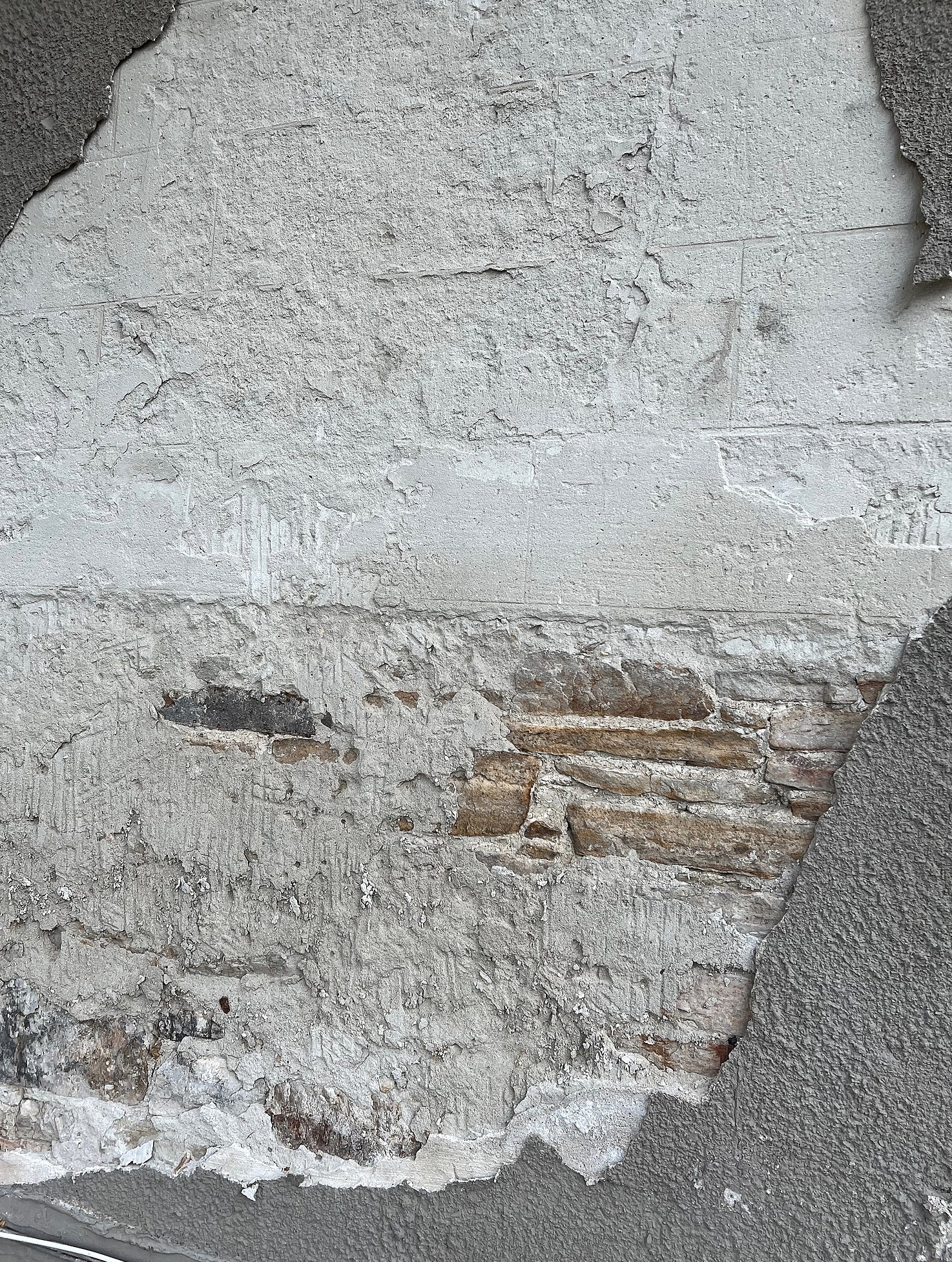
In masonry construction, condensation inside an assembly may show up as spalling brick or stone, or delaminating layers like stucco and parging. You may also see white stains where moisture passes through masonry - this is called efflorescence.