Future Code - Alterations to Existing Buildings
LISTEN...
The 2025 National Building Code includes a new section, Part 10 for Alterations to Existing Buildings. Contractors and renovators will still use materials and methods very similar to the way we build now, with changes to insulation levels, airtightness and mechanical systems.
An important thing to remember for making buildings perform better...
The more insulation we add to the building, the more important it is for buildings to be air tight. Equally, the more air tight we make our buildings, the more important it is that we have mechanical ventilation or "fresh air" machines.
When using the Alterations to Existing Buildings Code for planning and executing retrofits, we might see more of the following types of details:
CAVITY AND CONTINUOUS EXTERIOR INSULATION: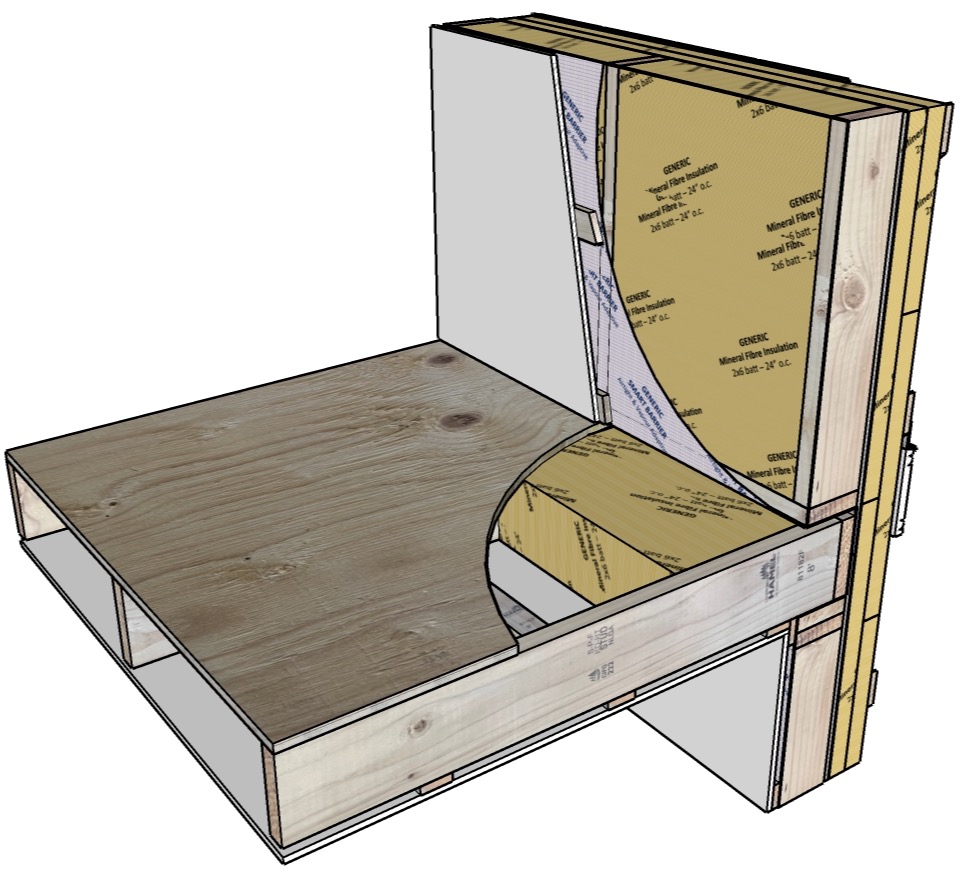 Creating a "super insulated" envelope may be achieved by filling framed cavities and providing for additional layers of insulation on the exterior of the assembly. This strategy also goes toward eliminating thermal bridges. Note that headers (rim joist) cavities are insulated and sealed the same as exterior walls. |
INCREASED ATTIC INSULATION: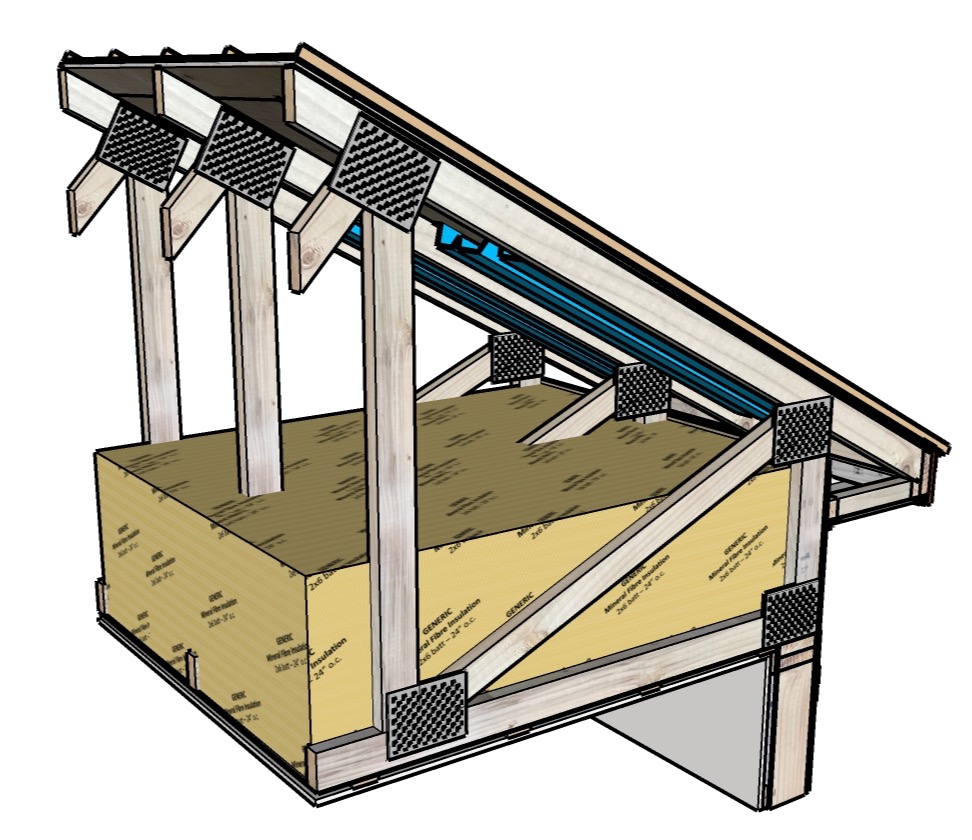 Attics and roof assemblies will need greater levels of insulation, in some cases totalling around R60 or more. Raised heel trusses and "hot roof" applications will be able to integrate the thermal boundary more easily with exterior walls, keeping the continuity of control layers in tact on above grade elements. |
INCREASED INSULATION ON FOUNDATIONS: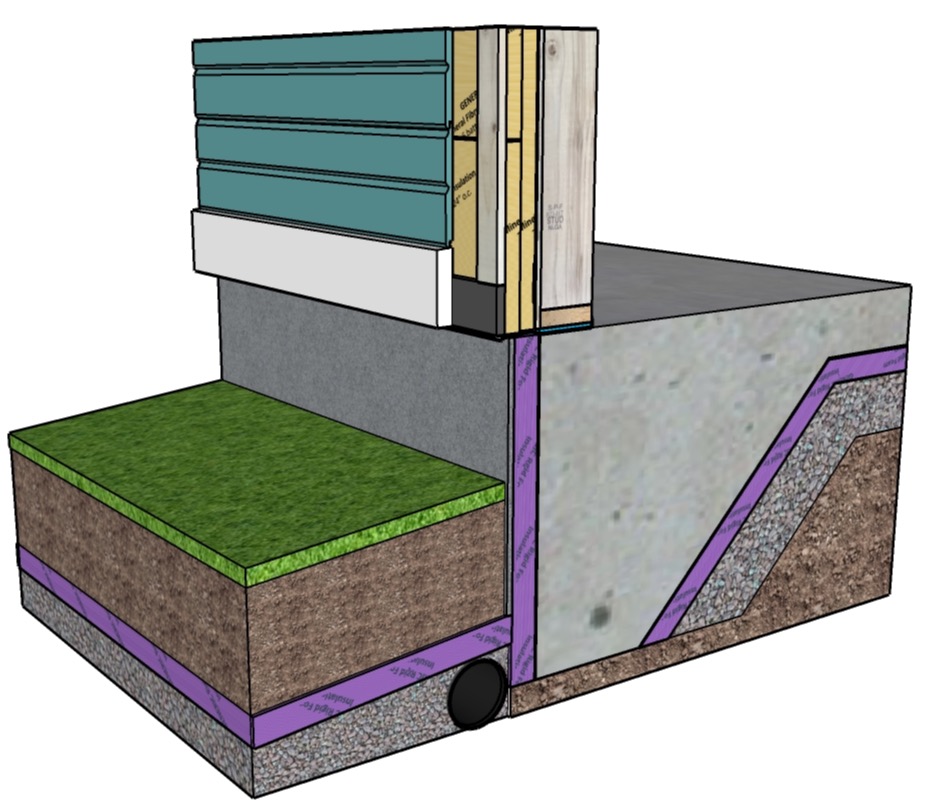 Just like the rest of the building, foundations and basements will require more insulation and integration with above grade assemblies. As carbon tracking becomes more prevalent, we may see more slab-on-grade foundations instead of full basements. |
CAREFUL DETAILING TO ELIMINATE THERMAL BRIDGING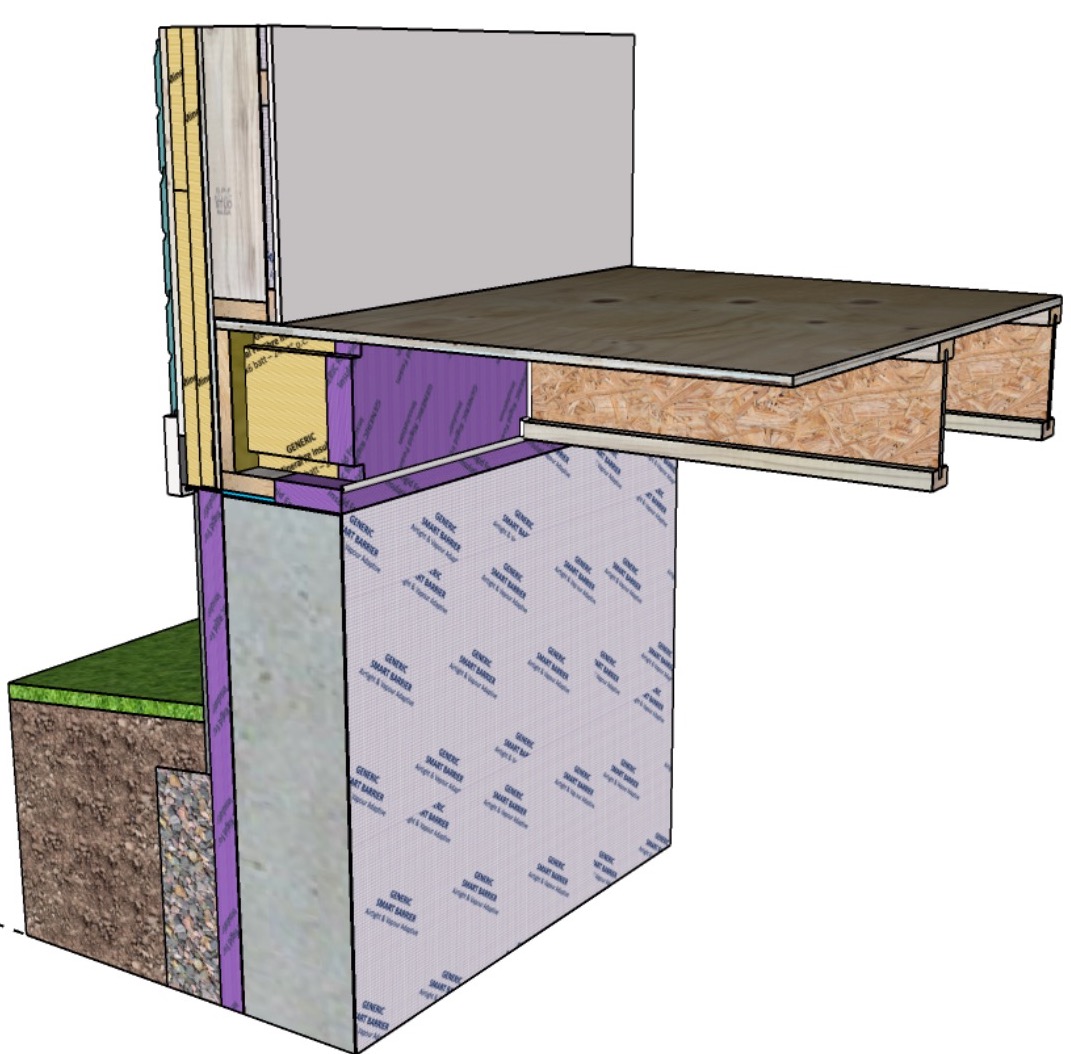 |