Air Tight Drywall Considerations
LISTEN...
Drywall is relatively cheap and a very common finish layer for most buildings. Contractors who work with drywall as a specialty are fast, efficient and usually focus their work exclusively on that product.
Important Considerations for Air Tight Drywall:
- Possible to provide an air barrier using standard materials and conventional building techniques.
- May withstand wind pressures.
- May survive construction abuse, have a long life, and be repaired over time.
- May block entry of air pollutants from wall cavity.
- Although recognized by National Building Code (NBC), not all code officials and trades are familiar with the Airtight Drywall Approach (ADA).
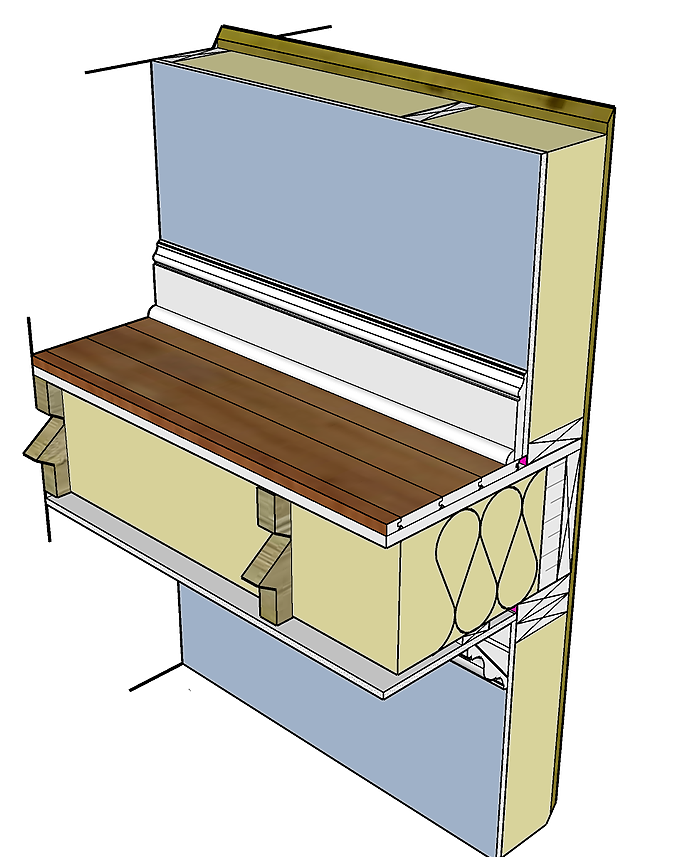
Be cautious in planning for Air Tight drywall - just like other barrier systems, it has drawbacks.
- Make sure your drywall installers understand that the project is using the airtight drywall approach. Some consider gypsum board to be a 'sacrificial' layer and treat it as such, creating hard-to-seal holes for utilities and outlets.
- Over its lifetime, it will see scratches, pin holes, dings and dents. Care must be taken to seal these holes.
- Drywall can't seal where it doesn't happen. Cavities outside the drywall layer need to be sealed with other materials.
- Outlets and penetrations for utilities must use airtight boxes, sealants or gaskets to provide continuity in the air barrier layer.
- Drywall may crack with the settling, shrinking and expanding of wood frame components. This must be considered as an issue for keeping an air tight layer in tact for the long run.